
Reviewed · WALKING TOURS
Ljubljana private walking tour with a local
Ljubljana is easy to admire on your own, but a local guide can help you notice why this compact city feels so carefully designed. This private walk moves from the food market to the Ljubljanica River, across Plečnik’s bridges, and through the squares that shaped Slovenian public life. Peter has led many of these walks, with Milos also appearing as a guide.
I like the personal format, since you can ask about food, folklore, architecture, or everyday life instead of listening to a fixed speech. I also like the route’s mix of major sights and small details, including a market milk machine, medieval punishments, and the odd-looking figures on Butchers’ Bridge. The main drawback is the tight two-hour schedule: you will see many places, but only a few interiors and no Ljubljana Castle visit.
Key points to know before booking
- A private two-hour walk: Your group has the guide to itself, making it easy to ask questions or adjust the pace.
- A strong Plečnik focus: The route includes the Triple Bridge, Shoemakers’ Bridge, the National and University Library, and other works by Ljubljana’s best-known architect.
- Market life, not just monuments: The Central Market introduces local produce, homemade goods, flowers, and unusual details such as a milk machine.
- English-language guiding: The experience is offered in English, with Peter and Milos among the guides who have led it.
- A useful first look at the city: The route covers the Old Town, riverfront, main squares, and famous bridges without needing transport.
- Good flexibility, with limits: The tour can be shaped around your interests, but the listed stops make for a full walk in two hours.
Why this private walk works well in Ljubljana
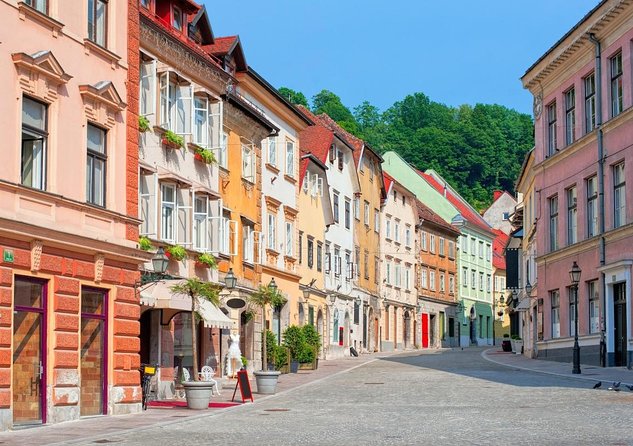
Ljubljana’s center is small enough to cross on foot, yet its buildings carry several layers of Slovenian, Austrian, French, Italian, and Yugoslav history. That can be hard to sort out when you are simply taking pictures. A guide gives you a timeline and points out how the city’s public spaces fit together.
The private format matters here. You are not trying to hear a guide over a large group, and you can pause when a question comes up. If you care more about architecture than political history, say so. If you want food suggestions or practical advice for the rest of your stay, ask early.
Peter’s guiding style, based on the experience details and customer feedback, leans toward history, folklore, architecture, and local recommendations. He has also adjusted start times, met people at their accommodation in the Old Town, dealt with rain and heat, and slowed the walk for someone with mobility issues. Milos has also guided the route and is described as helpful with suggestions for places to visit afterward.
That flexibility is useful, but it is wise to keep your expectations in check. This is an overview walk, not a museum tour or a full-day history class. Two hours gives you a clear sense of Ljubljana, but it does not leave time for every church, castle room, or cultural institution.
A few more things to do in Ljubljana worth a look
- Ljubljana: Guided Walk & Funicular Ride to Ljubljana Castle
★ 4.6 · 576 reviews - Ljubljana: Slovenian Cuisine Walking Tour with Tastings
★ 4.8 · 472 reviews - Ljubljana: 2h walking tour with local guide
★ 4.7 · 433 reviews
Starting at the Central Market
The walk begins at the Mouse Fountain in Ljubljana’s center and heads into the Central Market. The market has operated on this site for about 120 years, making it a good place to begin with ordinary city life rather than grand political stories.
You can expect to see fruit, vegetables, meat, dairy products, bread, oils, juices, flowers, and homemade goods brought in from different parts of Slovenia. Much of the produce is described as ecologically produced. The mention of a milk machine is a small but memorable detail, the kind of local curiosity you might miss if you simply crossed the market on your way to the river.
The market stop is listed at about 10 minutes, so this is more of an introduction than a food tasting session. Admission is included, but the description does not promise samples or purchases. If you hope to buy something, ask your guide how much time is available.
For me, the value of this stop is that it connects Slovenia’s countryside to the capital. You are not only looking at old facades. You are seeing what people bring into the city and what they sell to one another.
Cathedral doors and the Baroque fountain
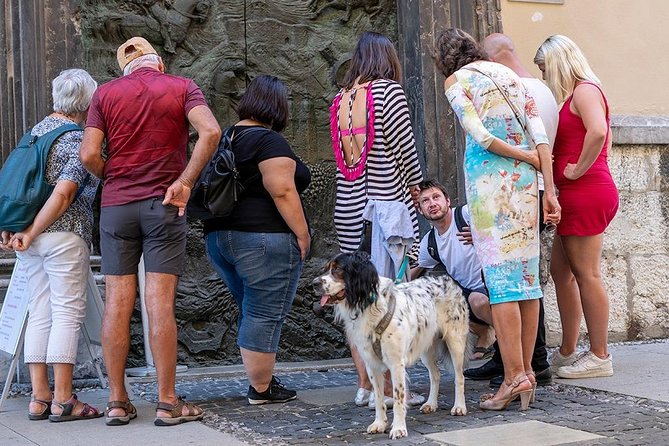
Next comes the Cathedral of St. Nicholas. The guide explains the cathedral’s history and points out its two famous sculpted doors, known as the Slovenian Door and the Ljubljana Door. Their subject is the history of Christianity in Slovenia, so this short stop gives you a way to read the building as a historical document rather than just a church with a decorated entrance.
The cathedral visit is listed at 10 minutes, but admission is not included. The information does not specify the entrance fee or guarantee interior access, so ask your guide about current opening arrangements if going inside is important to you.
The route then turns to the Fountain of Three Carniolan Rivers, also called the Robba Fountain. This Baroque work represents three rivers associated with the historical Carniola region. The stop lasts about five minutes, enough to look closely and hear why the sculpture matters.
The fountain is one of those sights that benefits from explanation. Without context, it can look like a handsome old fountain in a pretty square. With a guide, you get the artistic and historical meaning behind the figures and the connection between Ljubljana and the wider region.
Town Hall and the story behind Shoemakers’ Bridge
At the Town Hall, you see the building from outside and part of it from inside. It dates to the late 15th century, and Ljubljana’s mayors have governed from this building since that period. The stop is about 10 minutes and does not require an admission ticket.
This is a useful place to ask how Ljubljana is governed today and how the city changed over time. The tour description centers on the building’s long civic role, not on a formal interior visit, so expect a brief look rather than a guided tour of every room.
Shoemakers’ Bridge is one of the route’s more characterful stops. Designed by architect Jože Plečnik, it crosses the Ljubljanica and offers a chance to discuss both the river and medieval justice.
The bridge is tied to a grim local story. Butchers and bakers accused of cheating customers were reportedly dipped into the river as punishment. That gives the bridge a less polished side, and it also helps explain why the Ljubljanica was once far more central to work, trade, and public punishment than it may appear today.
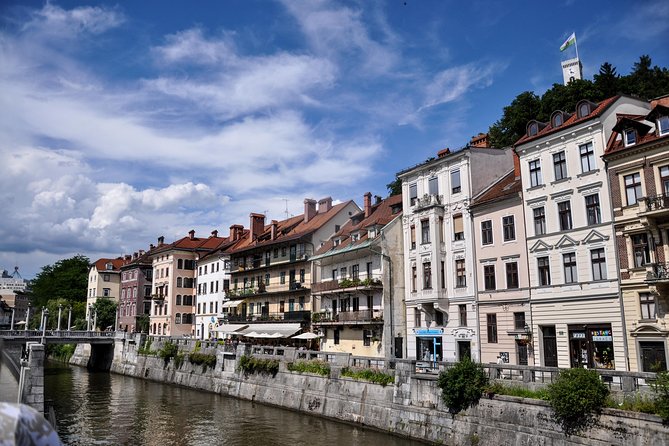
The guide also talks about the river’s role in the city’s past and present. This is where the walk begins to connect architecture with daily life. You are not just looking at a bridge designed by a famous architect. You are hearing what happened around it.
Same base, a different sort of day:
- Ljubljana: Postojna Cave & Predjama Castle Tickets and Tour
★ 4.9 · 2,146 reviews - Slovenia in One Day: Lake Bled, Postojna Cave and Predjama Castle
★ 5.0 · 879 reviews - Ljubljana: Castle Entry Ticket with Optional Funicular Ride
★ 4.3 · 718 reviews - From Ljubljana: Lake Bled & Postojna Cave with Entry Tickets
★ 4.8 · 694 reviews
Plečnik’s library and French Revolution Square
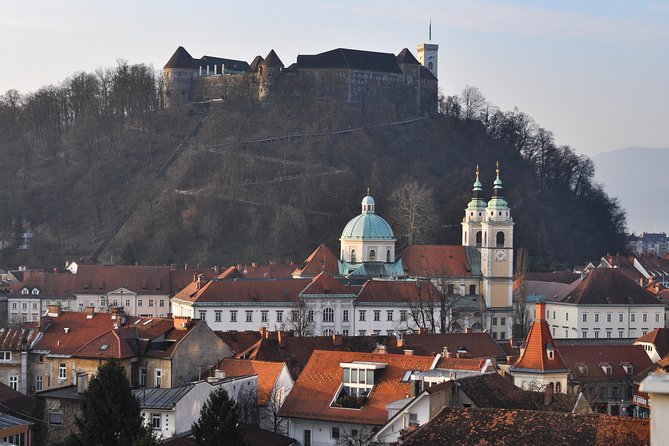
The National and University Library is described as Plečnik’s biggest homework. That phrase captures the building’s demanding design and its symbolic role as a temple of knowledge. You will see the exterior and hear about the meaning built into its architecture.
The stop is short, about five minutes, so do not expect a full library visit. The value is in learning how to look at the building. Plečnik used materials, shapes, and entrances to create a sense of movement from the ordinary world toward study and learning.
At French Revolution Square, three stories come together. You hear about the Teutonic knights and their monastery, Napoleon’s rule and the Illyrian Provinces, and Plečnik’s work in the area. Ten minutes is enough to establish the main connections, though the square deserves more time if you are especially interested in French or Habsburg history.
This is one reason a private guide helps. You can ask for more detail about Napoleon, the medieval religious orders, or Plečnik without forcing the whole group to change direction.
Congress Square and a view toward Ljubljana Castle
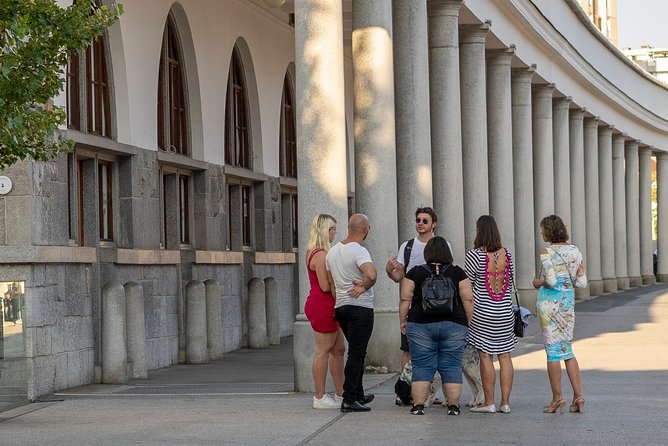
Congress Square, or Kongresni trg, brings together several important buildings and institutions. You see Star Park, the Ursuline Church, the Slovenian Philharmonic Orchestra building, and the Ljubljana University building. The guide also explains why the square has its name.
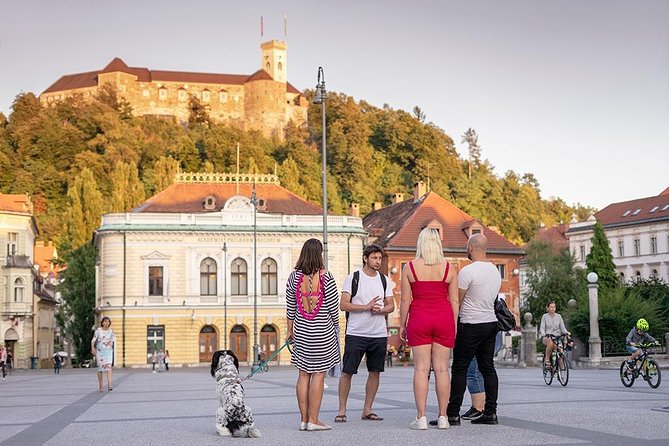
The Philharmonic building is tied to one of Europe’s oldest institutions of its kind, according to the tour information. The square is also a good place to look toward Ljubljana Castle, which sits above the city.
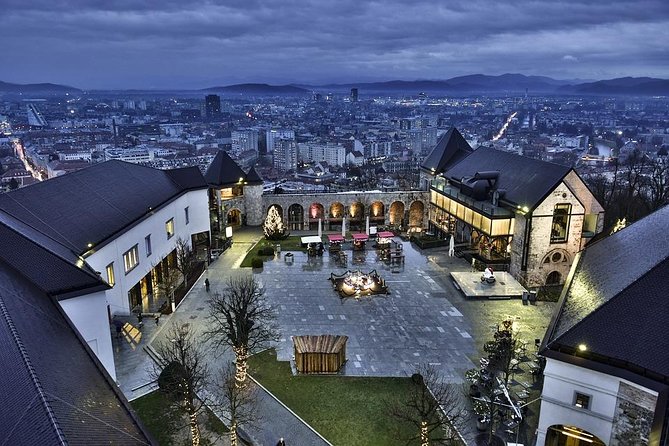
You do not go up to the castle on this walk. Instead, you hear how the castle has been used since it was built at the end of the 15th century. That is an important distinction when comparing tours. If your priority is the castle tower, museum rooms, or the funicular, this experience will not replace a separate castle visit.
Still, seeing the castle from Congress Square gives you a useful sense of Ljubljana’s layout. The old defensive center rises above the lower town, while the river, bridges, markets, and squares organize the city below.
Prešeren Square and the city’s literary heart
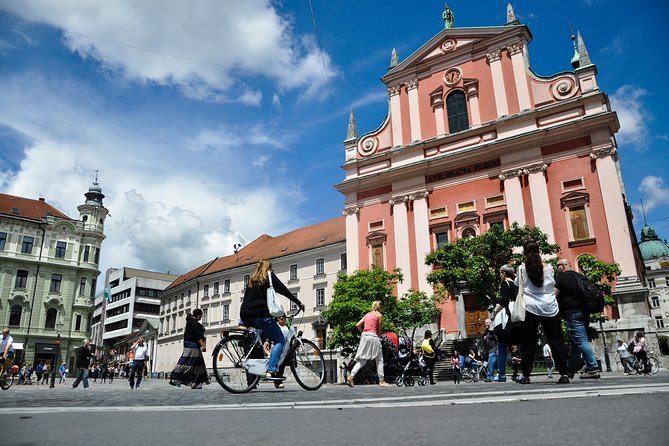
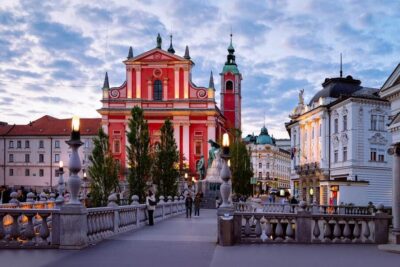
Prešeren Square is one of Ljubljana’s best places for orientation. From here, you can see the Triple Bridge, the pink Franciscan Church, Art Nouveau buildings, and the statue of France Prešeren, Slovenia’s most important poet.
The guide explains Prešeren’s importance to Slovenian literature and tells the story of his unreturned love. That personal thread makes the square easier to remember. It also shows how national identity can be expressed through poetry, public statues, and a city’s central meeting place.
The square offers several strong views at once, so the 10-minute stop can feel full. If you like photography, this is one of the route’s best pauses. You can frame the statue, church, bridges, and river corridor from one area.
The Franciscan Church receives a separate, very short stop of about three minutes. Its Baroque pink facade recalls Il Gesù in Rome. The tour does not promise a detailed interior visit, so treat this as an architectural introduction rather than a church tour.
Plečnik’s Triple Bridge and Ljubljana’s riverfront
The Triple Bridge is one of the defining sights of Ljubljana. Plečnik transformed what began as a single crossing into a group of three bridges, and the guide explains the history, purpose, and symbolism behind the design.
The stop is listed at five minutes. That is enough for the central idea, but you may want to linger after the tour. The bridges are a natural place to watch the river and understand how Ljubljana’s main public spaces connect.
Plečnik appears several times during the walk, and that repetition is useful. You see how one architect shaped bridges, squares, libraries, and streets into a unified city center. If you are interested in design, tell the guide at the start so more attention can go to materials, symmetry, movement, and symbolism.
The riverfront also helps break up the history. After churches, institutions, and political stories, you get open views and a sense of how people use central Ljubljana today.
Butchers’ Bridge and Dragon Bridge
Butchers’ Bridge is a newer crossing than the name might suggest. It is also known as the Love Bridge because couples attach padlocks to it. The guide explains why it carries the butcher’s name and discusses the grotesque statues placed on the bridge.
This stop combines modern habits with unsettling art. The love locks are familiar, but the statues give the bridge a stranger character. It is a good example of how Ljubljana mixes playful public life with work by serious artists.
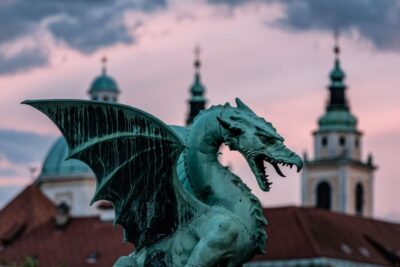
The final major sight is Dragon Bridge, one of the city’s best-known Art Nouveau structures. The guide explains why the dragon became Ljubljana’s symbol and points out the bridge’s architectural importance.
The dragon is more than a decorative mascot. It connects to the city’s stories and identity, which is why the bridge is such a useful ending. By this point, you have seen Ljubljana through several lenses: food, religion, civic power, literature, architecture, punishment, romance, and folklore.
The walk ends at Prešeren Square. That is a practical finish, since the square is one of the city’s main landmarks and a useful place to continue exploring on your own.
What the $78.64 price gets you
At $78.64 per person, this is not the cheapest way to see Ljubljana. The value depends heavily on your group size and how much you use the private format.
For one or two people, the price buys personal attention, the ability to ask constant questions, and a route shaped around your interests. For a larger group, the per-person cost may feel more reasonable, especially since group discounts are available.
You are paying for a guide rather than entrance tickets. Most stops are free, the market admission is included, and cathedral admission is not included. There is no promise of a castle visit, meal, tasting, or museum entry.
I would consider it good value if you have only a short stay and want a clear introduction before exploring alone. It is less compelling if you already know Ljubljana well or prefer to wander without a schedule.
Pace, weather, and practical details
The tour lasts about two hours and includes many stops. You should expect continuous walking through the Old Town, with short pauses for explanations and questions.
The pace can be adjusted in a private group. This has helped people dealing with jet lag, heat, rain, cold, or mobility concerns. Still, tell the guide in advance if someone needs a slower pace, since the route contains many stops and some walking between them.
The tour is offered in English and uses a mobile ticket. Service animals are allowed, and the meeting area is near public transportation. Confirmation is sent within 48 hours, subject to availability.
The experience is booked, on average, 57 days ahead, so I would not leave it until the last minute during a busy season. You can cancel for a full refund up to 24 hours before the start time. Changes or cancellations inside that window are not accepted for a refund.
Who should book this Ljubljana walk?
I would choose this tour if you are visiting Ljubljana for the first time, have two hours available, and want both the headline sights and the stories behind them. It is also a good fit for families or small groups who want to stop often and ask questions without holding up strangers.
It suits people who enjoy architecture, urban history, food markets, folklore, and practical local suggestions. Several past bookings also benefited from recommendations for cafes, shops, food, drinks, and further places to visit in Slovenia.
I would choose a different plan if your main goal is going inside museums, spending time at Ljubljana Castle, or sampling a wide range of Slovenian food. This is a walking introduction, not a food tour or a castle tour.
Should you book it?
Book it if you want a friendly, private orientation to Ljubljana with room for questions. The strongest features are the personal format, the wide range of sights, and the repeated attention to Jože Plečnik’s work.
If possible, request Peter when booking, though guide availability may vary. His approach includes history, folklore, architecture, and local advice, and he has shown flexibility with schedules and walking pace. Just remember that two hours moves quickly. You will leave with a strong map of the center, not a complete tour of every attraction.
FAQ
How long does the private Ljubljana walking tour last?
The tour lasts approximately two hours.
Is this a private tour?
Yes. Only your group participates in the activity.
What language is the tour offered in?
The tour is offered in English.
Which main sights are included?
The route includes the Central Market, Cathedral of St. Nicholas, Robba Fountain, Town Hall, Shoemakers’ Bridge, National and University Library, French Revolution Square, Congress Square, Prešeren Square, Triple Bridge, Franciscan Church, Butchers’ Bridge, and Dragon Bridge.
Is Ljubljana Castle included?
You can see Ljubljana Castle from Congress Square and hear about its history, but the tour does not include a visit to the castle itself.
Is cathedral admission included?
No. Admission to the Cathedral of St. Nicholas is not included.
Where does the tour start and end?
The tour starts at the Mouse Fountain in Ljubljana’s Center District and ends at Prešeren Square.
Can I cancel for a full refund?
Yes. You can cancel at least 24 hours before the start time for a full refund. Cancellations or changes made less than 24 hours before the start time are not accepted for a refund.
Just added in Ljubljana
- BEER WAY Ljubljana: Boat & Craft Beer Tasting Tour★ 4.6 · 16 reviews
- From Ljubljana: Triglav National Park Tour (Private)★ 5.0 · 19 reviews
- Ljubljana City Tour Including Ljubljana Castle★ 5.0 · 65 reviews
- Beer Tasting Ljubljana★ 5.0 · 67 reviews
- City Tour of Ljubljana★ 5.0 · 51 reviews
- Ljubljana: Private Tour with a Local★ 4.3 · 55 reviews
- Old Castle of Celje★ 4.5 · 51 reviews
- Ljubljana: Traditional Slovenian štrukelj Cooking Class★ 4.9 · 58 reviews
Walking Tours, compared.
Guided Walk & Funicular Ride to Ljubljana Castle
Read our review →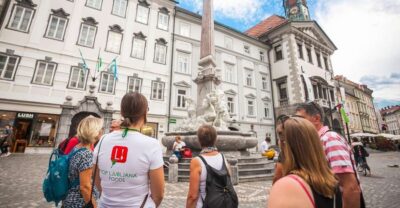

Piran Walking Tour with Local Wine and Food Tasting
Read our review →
Browse the lists this tour appears in